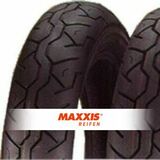
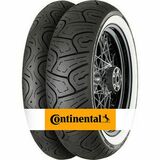
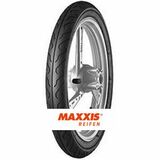
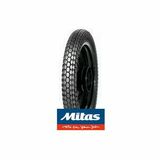
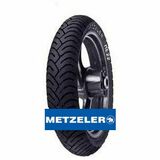
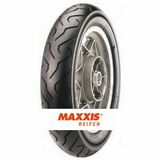
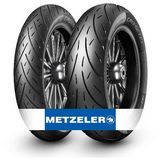
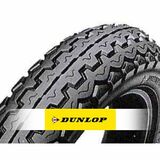
Why choose tyres specifically for your Custom?
Unlike a standard road tyre, the Custom tyre is an engineering feat designed to handle three key demands:
- Weight: A fully loaded custom bike (pillion + luggage) often exceeds 500 kg. The tyres feature a reinforced carcass (REINF or RF) to ensure total stability without deformation.
- Torque: The large-capacity engines in this category deliver strong torque from very low revs. The compound is specifically formulated to withstand mechanical stresses during acceleration.
- Comfort: The carcass is designed to absorb vibrations and road imperfections.
How to choose the right custom tyres?
Aesthetics
Here are the key markings to know:
- WWW (Wide White Wall): Wide white sidewall for a 1950s retro look.
- SW / NW (Single/Narrow White): A subtle narrow white stripe.
- BLK / BSW: Classic black sidewall.
Fitment: with or without inner tube
- TL (Tubeless): Tyre designed to run without an inner tube.
- TT (Tube Type): Requires an inner tube to be fitted.
Load index and specifics
The substantial weight of Custom and Cruiser motorcycles requires tyres designed to support this load without deforming.
- REINF / RF: Indicates a tyre with a "Reinforced" carcass.
- High load indices (70+): Rear tyres for some Customs often require indices of 77 (412 kg), 81 (462 kg) or even 87 (545 kg) to support the weight of the bike, pillion and luggage.
Carcass construction
Check the letter (or dash) just before the rim diameter.
- B (Bias-Belted): This is the standard for custom bikes. A bias-belted carcass that offers the best balance between stiffness and ride comfort. (e.g.: 150/80 B16)
- (The dash): Indicates a classic bias-ply construction. This is the historic, non-belted technology, often found on older bikes, small capacities or very vintage-profile tyres. (e.g.: 130/90 - 16)
- R (Radial): Increasingly common on modern, high-performance "Power Cruisers". This construction provides better handling precision and superior high-speed stability. (e.g.: 120/70 R17)
Classic and Retro Tyres: The perfect balance of style and safety
The "Classic" segment is not only about looks; it’s about preserving the handling characteristics of collector bikes, Café Racers and Scramblers.
- The "Vintage" profile: Unlike modern tyres, Classic tyres replicate period-correct tread patterns (longitudinal grooves, saw-tooth tread).
- Modern technologies: Beneath their old-school appearance, these tyres use contemporary rubber compounds (silica) to ensure reliable braking performance, where period tyres were limited.
Choosing a Classic tyre today gives you a vintage look without compromising performance. You benefit from a modern tyre construction and grip concealed beneath a retro design.
Longevity of Custom and Classic tyres
| Tyre type |
Custom / Cruiser |
Classic / Vintage |
| Front tyre |
18,000 to 25,000 km |
12,000 to 15,000 km |
| Rear tyre |
12,000 to 18,000 km |
7,000 to 12,000 km |
| Main wear factors |
Weight & Torque |
Soft compound & unstable pressure |
These values are indicative and may vary depending on the compound chosen and riding style.
Maximise the lifespan of your tyres
For your Custom motorcycle tyres:
- Check tyre pressure when cold: Even slight under-inflation (0.3 bar) is enough to cause carcass overheating.
Grip500 tip: Check pressure before every ride, or every 15 days if you use the bike daily.
- Suspension check ("cupping"): If your rear shocks are worn or poorly adjusted, the wheel "hops". This creates irregular wear in the form of facets or waves; this is known as cupping.
Grip500 tip: Adjust shock preload whenever you carry a pillion or luggage.
- Storage and "flat spot": A 350 kg motorcycle left standing for 3 months on its tyres will create a parking flat. This flat alters the carcass structure and causes vibrations that accelerate wear once you ride again.
Grip500 tip: For winter storage, increase pressure by 0.2 to 0.3 bar above the recommendation and move the bike slightly once a month to change the contact patch.
For your Classic motorcycle tyres:
- Crystallisation: Over the years, the rubber loses its essential oils and hardens. A tyre over 5 years old may look new but offers no grip, especially on wet roads.
Grip500 tip : Watch for the appearance of cracks on the sidewalls.
- Inner tube monitoring: Tube Type (TT) set-ups on spoked rims naturally lose their pressure faster than tubeless.
Grip500 tip: Regular checks are essential to avoid overheating.
- Store out of the elements: Vintage rubber is very sensitive to UV and temperature changes.
Grip500 tip: Store your bike in a dry place to prevent the rubber from ageing prematurely.