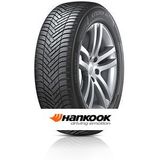
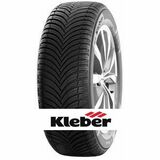
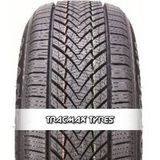
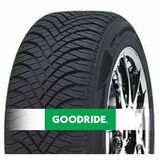
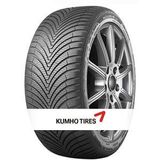
What is an all-season tyre?
Unlike summer or winter tyres, an all-season tyre uses a specific rubber compound that:
- In summer: Stays sufficiently rigid to avoid premature wear and ensure short braking distances on dry roads.
- In winter: Remains flexible even when temperatures fall below 7°C, ensuring optimal grip on cold, wet or lightly snow-covered roads.
For an all-season tyre to be genuinely effective and legal in winter conditions, it must bear the 3PMSF (Three Peak Mountain Snowflake) marking. This pictogram is the only true indicator of winter performance. Depicted as a three-peaked mountain with a snowflake, it guarantees the tyre has been tested and approved for real snow conditions.
What are the advantages of an all-season tyre?
Year-round peace of mind in changing weather
Thanks to its hybrid compound, the all-season tyre adapts instantly to changing weather. You can drive with peace of mind without having to book a tyre change at every change of season.
Balanced performance in all conditions
Neither a summer nor a winter tyre, it offers an excellent balance of performance. Its tread pattern is specifically designed to:
- On dry roads: Deliver stable and precise handling.
- On wet roads: Channel water away quickly to reduce the risk of aquaplaning thanks to deeper grooves than a standard summer tyre.
- On snow: Provide sufficient traction to start and stop safely thanks to sipes that "bite" into the snow.
Winter compliance and safety (3PMSF certification)
The majority of our all-season tyres are 3PMSF (Three Peak Mountain Snowflake) certified. This label guarantees that the tyre has been successfully tested on snow. Choosing an all-season tyre bearing the 3PMSF marking is the assurance of equipment that is officially recognised and suitable for winter conditions.
Real savings and space savings
This is the ultimate practical advantage. By using a single set of tyres for the year:
- Controlled budget: You avoid buying two complete sets of tyres.
- Reduced costs: You eliminate twice-yearly fitting and balancing costs.
- Simplified logistics: You no longer need to store bulky tyres at home or pay for a storage service.
How to choose: all-season, summer or winter tyres?
Your choice should depend on your environment:
- All-season tyre: This type of tyre is now the ideal solution for the vast majority of drivers in regions with a temperate climate (-7°C / +30°C).
- Summer tyre: Essential if you live in an area where temperatures never drop below 7°C.
- Winter tyre: Crucial if you live at altitude or often drive on snowy/icy roads.
Can you drive in the mountains with all-season tyres?
Yes, it is possible provided they are certified. To drive in the mountains safely and legally, check for the 3PMSF marking on the sidewall of your all-season tyres.
Can you fit all-season tyres together with summer or winter tyres?
It is strongly discouraged to fit all-season tyres together with summer or winter tyres on the same vehicle. Although no law prevents having different tread patterns between the front and rear, this practice creates a major imbalance in grip.
To ensure a stable trajectory and optimal safety, our experts recommend equipping your vehicle with four identical tyres.