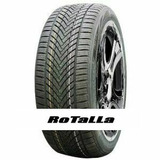
What is a reinforced (XL) tyre?
A reinforced tyre is a tyre whose internal structure is optimised to support a higher load and inflation pressure than a standard tyre of the same size.
Contrary to popular belief, it is not the rubber that is "harder", but the internal structure (casing) that is stronger. Its construction includes additional casing plies, high-density steel belts, and stiffer sidewalls.
This architecture enables the tyre to:
- Withstand higher inflation pressure: On average 0.4 bar more than a standard tyre.
- Withstand lateral forces: On sports cars, the stiffness of XL sidewalls absorbs mass transfers and high torque.
- Improve safety on heavier vehicles: It is the safety standard for SUVs, light commercial vehicles and electric vehicles, whose weight is higher.
- Offer improved durability: Its reinforced structure limits tyre deformation under load, thereby reducing internal heat build-up.
To recognise a tyre capable of carrying heavy loads, look at the tyre sidewall, just after the load index and speed rating.
XL tyre and reinforced tyre: is it the same thing?
Yes. The terms "XL" and "reinforced tyre" are equivalent, but markings vary by manufacturer. Here are the most common abbreviations you may see:
- XL (Extra Load): The most universal marking.
- REINF / RF / RFD (Reinforced): Used by some brands to indicate a reinforced casing.
Note: The absence of a specific marking means your tyre is Standard Load (SL). It is designed for normal load conditions as defined by the manufacturer.
What is the difference between an XL, HL and SL tyre?
The main difference lies in the maximum load capacity the tyre can support. This capacity is directly linked to the inflation pressure the casing can withstand.
| Marking |
Meaning |
Load Capacity |
Inflation Pressure |
Main Use |
| SL |
Standard Load |
Standard |
Up to around 2.5 bar |
City cars and light saloons. |
| XL |
Extra Load |
High |
Up to around 2.9 bar
(+0.4 bar vs SL) |
SUVs, estate cars, sports cars and high-performance saloons. |
| HL |
High Load |
Maximum
(+10% vs XL) |
Same as XL (2.9 bar) |
Heavy electric and hybrid vehicles. |
Key points when choosing:
- SL (Standard) tyre: The classic tyre designed for normal load conditions.
- XL (Extra Load) tyre: Thanks to a reinforced internal structure, it accepts higher pressure to carry more weight or handle sporty driving stresses without deforming.
- HL (High Load) tyre: The new essential standard for modern electric cars. It supports up to 10% more load than an XL tyre of the same size, without requiring an increase in inflation pressure.
WHICH VEHICLES ARE REINFORCED TYRES DESIGNED FOR?
Reinforced tyres are not limited to a single type of use; their robust design meets the needs of a wide variety of vehicles subjected to high weight or performance demands.
- Sports cars and high-performance saloons: The reinforced casing absorbs significant mass transfers and lateral forces in corners, offering superior steering precision.
- SUVs, 4x4s and estate cars: Due to their weight or their ability to carry loads regularly (luggage, equipment, ...), these vehicles need a rigid structure to ensure stable, safe handling.
- Electric and hybrid vehicles: The considerable weight of the batteries generally requires the use of XL or HL tyres to maintain tyre structure without sacrificing comfort.
- Leisure vehicles (caravans and trailers): These tyres are essential to support prolonged static loads (winter storage) and to avoid overheating or blowouts on long journeys.
Grip500 note: Although they carry heavy loads, commercial vehicles do not use the XL marking, but their own standard identified by the letter "C" on the tyre sidewall.
Can I fit reinforced tyres on my vehicle?
Yes, it is entirely permitted and possible to fit reinforced tyres to any vehicle, even if it was not originally approved with this marking.
Warning: If your vehicle requires reinforced tyres, you must never step down to standard tyres. It is strictly prohibited and dangerous to fit a lower rating than that recommended by the manufacturer.