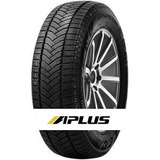
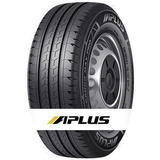
Why choose specific van tyres?
Transporting heavy loads and intensive journeys impose mechanical stresses that only a van tyre can withstand. Unlike passenger car tyres, van tyres require a construction capable of maintaining perfect stability, even at full load.
Investing in the right van tyre ensures:
- Reinforced construction: The casing is made up of multiple reinforcement plies to support higher inflation pressures. It prevents the tyre from sagging under weight, ensuring better handling.
- Sidewall protection: The sidewalls benefit from a thicker rubber layer to limit damage caused by scuffing and kerb impacts, common during city deliveries or on worksites.
- Cost-efficiency and longevity: The tread uses specific rubber compounds that better resist abrasion. The result: less deformation, controlled fuel consumption, and a reduced cost per kilometre.
Understanding the "Type C" marking and the load index
C-type van tyres
On the sidewall of your tyres, the letter C ("Commercial") indicates the product has undergone resistance tests specific to light commercial vehicles. Unlike a standard tyre, a type-C commercial vehicle tyres is tested to withstand higher inflation pressures and intensive load cycles.
The dual load index
The distinctive feature of van tyres often lies in their dual load marking (e.g. 107/105).
- 107 (single fitment): Maximum load capacity per tyre on a standard axle (2 tyres).
- 105 (twin fitment): Capacity per tyre for axles with twin wheels (4 tyres on the rear axle)
Why is the second index lower? In twin fitment, the load capacity per tyre is reduced to provide a safety margin. This compensates for any potential pressure difference between the two tyres.
C-type tyres vs XL tyres: Do not confuse them
It is common to confuse XL (Extra Load) tyres with Type C tyres.
- XL tyres are reinforced car tyres for heavy passenger vehicles (SUVs, family saloons).
- Commercial (C) tyres are designed for intensive professional use. Their construction is specifically developed to meet requirements for performance, safety, and durability.
Important: fitting XL tyres to a vehicle whose manufacturer approval requires a C marking carries major risks. It can impair handling, render the vehicle non-compliant with current safety standards, and may lead your insurer to refuse cover in the event of a claim.
Maintain your tyres to optimise your cost-efficiency
To get the best from your van tyres, pressure is the key factor. An underinflated tyre is not only dangerous, it is costly.
- Fuel savings: Underinflation increases rolling resistance. For a loaded van, this can lead to a significant rise in fuel consumption.
- Mileage performance: Incorrect pressure causes irregular and premature tread wear. Maintaining the recommended pressure extends tyre life and spaces out replacements.
- Safety and durability: Correct pressure prevents casing overheating, reducing the risk of blowouts.
GRIP500 tip: Check pressures cold at least once a month, following the manufacturer’s recommendations. On van tyres, pressures are significantly higher than on cars and can reach or exceed 4-5 bar depending on load and size.